
This article was first published on 8 January 2026 on Kirsty Hughes’s substack at https://kirstyhughes.substack.com/p/where-now-for-europe-in-this-new.
By Kirsty Hughes
Today, France’s President Macron dared to criticise the delinquent President of the United States. The US, he said is: “breaking free from the international rules that it used to promote” and, Macron continued, “Every day, people are wondering if Greenland will be invaded, or whether Canada will face the threat of becoming the 51st [U.S.] state”.
Certainly, it’s true that we are left to wonder what will happen tomorrow and the day after, as Europe and other countries round the world watch, react or – especially in Europe – attempt to pacify Trump amidst his upending of any global order. The EU 26 (minus Hungary, once again) put out a bland and general statement, on Monday, about international law, Venezuela, the will of the Venezuelan people and more without offering a view on the legality of what the US did. It was left to just a couple of European countries, Spain and Norway, this week to state that Trump’s Venezuela adventure is not in line with international law (as did France’s foreign minister – a line not followed by Macron so far).
As the MAGA eye swivelled back to Greenland, EU leaders plus Starmer in the UK, felt they had to say something while still trying not to irritate Trump. The statement by leaders of Denmark France, Germany, Italy, Poland, Spain, and the UK, on Tuesday, insisted that NATO’s collective security in the Arctic depended on all its allies, especially the US, but did, at least, dare to end with the statement that: “Greenland belongs to its people. It is for Denmark and Greenland, and them only, to decide on matters concerning Denmark and Greenland.”
Then, by Wednesday this week, attention shifted briefly to the US capture of an empty tanker in the Atlantic with UK assistance, including the use of Wick John O’Groats airport – which First Minister John Swinney was not informed about (Scotland could perhaps do with a statement saying it belongs to its people). Defence minister, John Healey, told the Commons the UK was stepping up its actions against shadow vessels.
With domestic matters pressing on Keir Starmer, Thursday was the day he chose to make a fairly rapid U-turn on pub business rates before hosting backbench Labour MPs at Chequers to attempt to cheer them up as Labour’s poll ratings fall behind even the Tories. The UK government’s new year messaging on action to tackle the cost of living has been invisible amongst all this. And the international chaos deliberately provoked by Trump and his sidekicks has continued.
Trump announced on Wednesday evening that he was withdrawing the US from the UN Framework Convention on Climate Change and dozens of other international bodies. Meanwhile, in Minnesota, an ICE agent shot dead Renee Nicole Macklin Good leading to wide protests. The domestic state of the US, its destructive, governing cabal and its new authoritarianism leads to little or no comment from European leaders – and so an absence of support to the many millions fighting back against Trump’s destruction of US democracy.
Europe and the UK’s appeasement of Trump is driven, in part, by desperate hopes that Trump will back a decent enough peace for Ukraine, though whether Trump will agree, whether such an agreement or security commitment from the US would have any value and whether Putin would accept a deal in the coming weeks are all, at best, open questions. France and the UK did agree on Tuesday to put troops on the ground to monitor a ceasefire in the event of a deal but whether that scenario will be forthcoming, whether troop numbers will be remotely adequate and how Russia will behave in the context of a ceasefire again leaves more questions than answers for now.
There are no simple answers here. That the ‘West’ no longer exists, even if NATO does for now, is not new news. But the EU and UK have no rapid or strategic response to offer. It is understandable that European governments are still working to back Ukraine and not give up efforts towards a peace deal. And the entanglement of EU and UK security with the dominant US is not easy to solve quickly.
But running European foreign policy (including the UK’s) as one of desperately trying to keep an out-of-control, far right US administration on board while rarely or never commenting on the reality of our unfolding, unstable world is no solution at all. European appeasement may rather encourage Trump in his mayhem than keep him on board in any way. And weakness and kowtowing are never impressive nor influential. Taking clear positions, showing some strength and confidence, and having the strategy to back up those positions is vital.
The UK’s sidelining by Brexit is not helping here either. The EU’s larger states, especially France and Germany, have managed to work well with the UK in an ad hoc way on Ukraine. But the EU, itself, is failing to construct an adequate, broad political, security and economic response to this new world.
And the UK, despite being at the table and on the phone for some of the Ukraine and Greenland discussions, is in a much weaker and less central position with no influence on how the European Union attempts to draw up a serious, comprehensive strategy for our times. There are no simple solutions. But timidity, appeasement and ad hoc responses are not just an indication of weakness but a path to ever more fragility and feebleness.
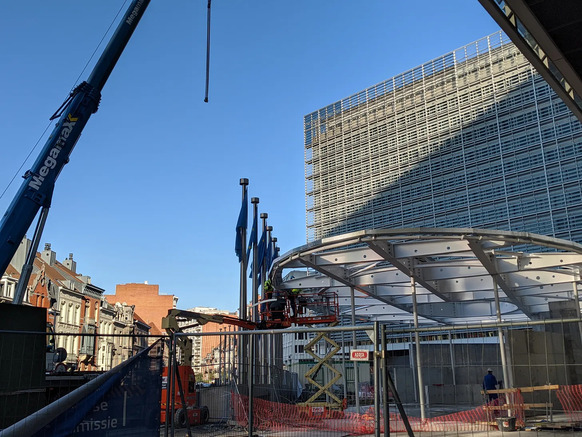
Picture credit: Kirsty Hughes, https://kirstyhughes.substack.com/p/where-now-for-europe-in-this-new
The European Movement in Scotland is committed to promoting the essential European value of free speech. Consequently, we regularly publish articles by leading academics, journalists and others discussing issues germane to Scotland’s place in Europe. Such articles do not necessarily reflect the views of the European Movement in Scotland.